
Jimmy “Superfly” Snuka

snuka cropped

In the early 80s, few sights were more electrifying than the spectacle of Jimmy “Superfly” Snuka perched atop a turnbuckle about to live up to his name and, seemingly, break the bonds of gravity. The one time I saw him live, in some run-down high school gymnasium on a bible black and freezing Tuesday night in February of 1982, I rushed home and re-wrote Tennyson’s “The Eagle” in a spiral notebook I still have to this day.

He grasps the ‘buckle with crooked hands
Undisputed hero of the minor market lands
Ring’d with the faces of yahoos he stands

The injured opponent beneath him crawls
While the haughty climber nods to our calls
And like a thunderbolt he falls

I took a picture of him that night, too, from about five feet away as he strode back to the dingy locker room that served as a dressing room. It’s a bit blurry, but there’s no mistaking his power and charisma–he looks larger than life—and in the background you can see rows of people going absolutely apeshit as he moves past. It didn’t matter who the belt-holder was at that time–some lame-ass doughboy named Bob Backlund, I think–Jimmy Snuka was the people’s champ, and it was because he was doing things all the rest of us could only dream of. He really did fly.

Alas, everything that flies must at some point return to earth and it turned out that Jimmy was no better than the next palooka, and maybe a bit worse. He loved to drink and snort coke and he had some anger management problems that were no doubt exacerbated by the chemicals he was taking to keep that bronze physique so chiseled. He played a solo game of handball one night with some young woman’s head against the walls of a $29.99 Allentown, Pennsylvania motel room and she ended up dying from it. He managed to “wrestle free” of any legal consequences, and indeed, the upstanding people who run pro wrestling managed to keep a pretty tight lid on the whole abhorrent affair, but it’s not exactly the kind of thing that keeps you in a guy’s corner once you find out about it.

He hasn’t done much wrestling-wise since the mid 90s, but he still puts on an occasional show in sleepy rat-hole towns here and there. If you look at the fairly recently-taken pictures that accompany his Wikipedia page, you can pretty much see exactly what Glenn Danzig is going to look like in a decade or so. It ain’t pretty. But hey, professional wrestling is a tough racket and so is punk rock.


J. Danforth Quayle

quayle

He moved–like a tiger on Vaseline. He could lick ‘em by smiling, his ass was God-given, he was the nazz. A  southpaw with a tan as white as Midwestern snow, the fact of the matter is, if you were anywhere near Greencastle, Indiana in the late 60s you couldn’t spend a day in that place without picking up the vibe of the hippest hepcat in town, a college student, a fraternity member even, who nonetheless exuded the gravity of a guru and the sex appeal of a silent movie sheik.

In 1967, a struggling young British troubadour named David Jones passed through town and played an acoustic show in the coffee nook at the Student Center at DePauw University. After the show he was introduced to “Dan the Man”—and he talked with this man; he got stoned with this man; he was changed by this man. Jones, who at Quayle’s suggestion would soon change his surname to Bowie, returned to England and ruminated on his profound experience for an entire five years, but by 1972 he had come to grips with what he had learned enough to create an alter-ego based on the life of this American sage who had exerted so much influence on him. And rock and roll was never the same.

Lloyd Bentsen, you are no Ziggy Stardust!!!

Home Shopping Network

lizahsn video

In 1985, a hammer blow from Florida put the first cracks in the foundation of a centuries-old brick and mortar hegemony that has since crumbled entirely. Home Shopping Network allowed people to shop while they were watching TV, and just like that, commerce had suddenly become entertainment! All you needed was a television, a telephone, and an overwhelming desire to own cheap jewelry, hand-knitted “theme” sweaters, 400-in-1 kitchen gadgets, celebrity-endorsed fragrances, supposedly rare baseball cards, soda-making machines, hermit crab colonies–the list went on forever. If you sat there long enough, just about anything you could think of would come parading into view, its wondrous merits detailed in breathless hyperbole by one of the HSN hosts.

Home Shopping Network also wreaked havoc on a little thing called the MSRP, or Manufacturer’s Suggested Retail Price. Before HSN, if you wanted to purchase something like an officially-licensed The Golden Girls Christmas Tree Ornament set, you went to F.W. Woolworth or your local equivalent, paid $9.99 for it and went home. On HSN, that same item was now “worth” $79.99, marked down 70% (for the next hour only!) so the final cost to you had now ballooned to $23.99. Plus shipping. A terrible deal when compared to the old way, but it seemed like a good deal so legions of HSN viewers burned up the phone lines as if the Hindenburg had just brushed up against them.

FUN FACT: Home Shopping Network is based in St. Petersburg, Florida and they have always fostered a friendly rivalry with the Church of Scientology, which is based just up the road in neighboring Clearwater. Every year in February the two corporations deploy their warships out onto Tampa Bay to battle for the rights to the Thetan Cup, a beautiful sterling silver trophy that was designed and smithed by L. Ron Hubbard himself. This is not a reenactment or field exercise but an actual naval engagement using real ordnance and participants on both sides do perish every year, but all the money raised from ticket receipts and sales of replica Thetan Cups sold on HSN goes to charity, so it is most certainly worth it.

Lowenbrau

lowenbrau one
The foreign beer that wasn’t really foreign. At some point, Miller Brewing Company thought it would be cute or whatever to brew a replica German beer in America and sell it for two or three bucks more than the going rate for its domestics. Even though it was a domestic. They wrapped it in a handsome sky blue label and even put silver foil around the neck like you would a bottle of fine champagne. And yet it never really caught on. It just didn’t have the “it” factor of a real foreign beer, because let’s face it, Milwaukee is hardly Amsterdam or Munich.

Lowenbrau was a pretender stepping into the ring with giants like Heineken and Molson Golden, and it got pummeled. Even smaller players had its number. Canada’s Moosehead had cool “Moose is Loose” T-Shirts and Germany’s St. Pauli Girl had buxom Bavarian (no matter the beer was actually brewed in the Hanseatic city of Bremen) barmaids that looked great on huge posters. Lowenbrau had a lame version of Wham’s “Last Christmas” video. I remember leaving a six pack in the refrigerator at a high school party once, (which would pretty much guarantee you getting a couple of bottles nicked) and no one stole even one of them. So if it couldn’t even tempt a bunch of punk kids walking around with swill like Little Kings Cream Ale and Mickey’s Big Mouths in their hands, which chance did it have when the Michael Milkens and Ivan Boeskys of the world sat down for a cold brew?

Oxford Blues

oxford-blues-picture

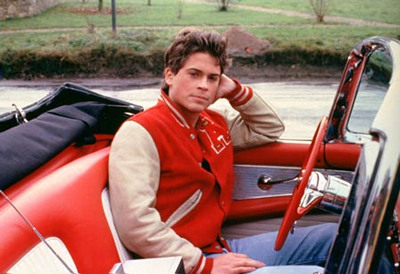
It sounds crazy, but I’m convinced that way back in 1986, when Andre Agassi was just a skinny kid boarding at the Nick Bollettieri Tennis Academy, he and a couple of his fellow racket brats saw this movie somewhere like the DeSoto Square Mall in Bradenton one night, and just like that, the rebel “ANDRE AGASSI” was born.

In Oxford Blues, a cocky kid from Las Vegas with outrageous hair and a love of acid-washed denim falls through the looking glass and ends up at Oxford University in England. He doesn’t exactly fit in, and by refusing to give even an inch to his host country’s traditions and mores, he makes things extremely difficult for himself until he ends up being shunned and reviled by all. Then after a period of time, he realizes he was wrong, learns to embrace all those stuffy conventions he had once fought tooth and nail, eventually claiming victory in true underdog Yankee style.

I’m telling you, it’s the story of Andre Agassi and Wimbledon! Las Vegas native Andre saw this movie, immediately identified with Rob Lowe’s character Nick DeAngelo, and decided to be that character. Right from the start, he wielded a big Prince tennis racket of contention with the All-England Club—the dress code was “depersonalizing,” bowing towards the royal box “degrading,” forcing world-class athletes to subsist wholly on strawberries and cream for two weeks “downright dangerous.” He refused to even go there for a couple years, but he eventually (just like Nick!) came around, started behaving himself, and in 1992 won his first Grand Slam victory at the very Major he seemed least likely to.

Hooray for Hollywood!

Ferrari Testarossa

13782

Was this THE exotic supercar of the 80s? In terms of mass appeal, I really can’t think of anything that would knock it from the top of the automotive mountain. Lamborghini? Yeah, the Countach was still going strong and it was without question an awesome-looking car, but the design dated from the early 70s, so it’s hard to claim that it “belonged” to the 80s. Lambo’s child that decade was the Jalpa, which was definitely not a ride you saw many people rushing to stick up on their dorm room wall. Maserati? Forget it, the 80s were most distinctly unkind to this marque—the languid, ugly Biturbo was a shamefully tarnished tine on the famous trident for sure. Lotus Esprit? Not bad, but hey, it had a four cylinder engine, just like your degenerate Uncle Ralph’s 1978 Chevy Monza. RUF Porsche 911? Fast as hell for sure, but again, we’re talking about a basic design that had been around for decades at that point.

Later in the decade, the Porsche 959 and Ferrari F40 appeared and while they were untouchable in terms of performance, they were almost like one-off freaks in a way. No, it seems to me that as an “everyday” supercar, the Testarossa captured the public’s imagination like no other. Every Friday night, millions of people tuned in to watch a certain Bianco-colored version chase down criminals in Miami. Michael Jackson even owned one, although I’m not sure he had the physical or mental capabilities to actually drive it. And for just one lousy quarter, anybody could sit behind the wheel of one (next to a hot blond, no less) thanks to the Sega arcade game Out Run.

What do you think?

COPS

Image

If you are ever doing something you know is wrong, like, say, publicly masturbating across the street from a middle school or waving a Jennings Arms .25 ACP caliber pistol in the face of some hapless BevMo! clerk, and you suddenly hear the watered-down reggae song “Bad Boys” start emanating out of thin air, well, you’d best put on your camera-ready face because you are about to be a television star! Back in 1989, the fly-on-the-wall aspect of peeking over the shoulders of police officers as they chased, tackled and then struggled to communicate with a bunch of fucked-up fuck-ups lying through their teeth in answer to every single question asked of them was a unique and somewhat guilty indulgence. Were we supposed to be seeing this stuff? Was it okay to enjoy watching it?? Those kind of questions were legitimate concerns back then, but we as a people quickly got over it, so much so that these days “reality television” dominates the dial with a bounty of lowest common denominator-fueled trash that is, quite frankly, hard to stomach.

I used to wonder if the powers that be in counties like Broward, King and Multnomah felt they’d made a deal with the devil soon after signing their contracts with Barbour/Langley Productions as viewers from coast to coast witnessed the antics of their local street vermin and undoubtedly made personal pledges to never get within several hundred miles of their respective municipalities. Now, I don’t think it really made a difference. Every community has its “bad apples.” The funny thing about COPS was that it always ran at 8pm on Saturday nights, making it the perfect background entertainment for groups of friends to watch while “pre-gaming” at someone’s house before heading out to get even more smashed at nearby bars and nightclubs. Whether these broadcasts served as a deterrent or an inspiration to the evening’s subsequent behavior is a difficult question to answer…

Tom Clancy

Image

Was he REALLY just a small-town insurance agent turned writer? Do you really think some “average guy from Maryland” was able to draw such meticulous renderings of the inner workings of America’s most glorious instruments, both martial and diplomatic, of the post-détente Cold War by reading Popular Science magazine and attending gun shows?  No, Clancy was a mole. A mole who had infiltrated the U.S. Government on behalf of the U.S. Government, but a mole nonetheless. The full facts of his only recently-ended mission probably won’t see the light of day for another 100 years, if ever. I have a feeling it was part of a covert operation to instill pride and patriotism in those American citizens who were sorely lacking it (like Chris Jackson and Roseanne Barr), but who knows?

If you don’t believe me, just take a look at his dust cover jacket photos over the years. He’s always standing on the deck of an aircraft carrier or sitting in a fighter jet. Do you think the powers that be are wont to allow any Joe Schmoe writer and his accompanying photographer to stroll about and around these kinds of top-secret billion-dollar pieces of machinery so they can get some “good snaps” for their publishing house? Yeah, right, just try it sometime and see, but make sure your last will and testament is in proper order. Because they will destroy you.

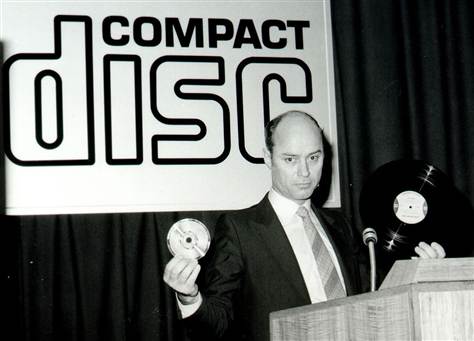
The Compact Disc

070816_cd2_hmed_3p_grid-6x2

The technology of music recording is well over a century old–dating back to the late 1800s when ingenious pioneers used spools of wire to record the astonishing abilities of Caroliner the Singing Bull. Audio fidelity quickly progressed from those primitive methods, but at every step of the way, the pricing for pre-recorded music media always stayed within reach of every citizen with two ears to listen with. But in the 1980s, this all changed.

In 1983 anyone receiving income from a job, allowance or even a monthly welfare donation could easily afford to purchase a double-sided vinyl record (called an LP or “long player”). They listed for $8.98 and quite often the “street price” was even a dollar or two lower. Suddenly, from overseas, there came these discs—one-sided, mind you, so you were already getting half of what was offered before–with a list price of $18.98. And since it was a new, shiny thing (both literally and figuratively) people couldn’t get to the store fast enough to purchase these objects, whether they could afford them or not. (And most couldn’t). Worst of all, this new media was unplayable on the then current belt- or direct-driven turntables, so every single person who wanted to hear their favorite music had to shell out HUNDREDS of dollars on so called state-of-the-art CD “readers” with luminescent displays and cheap plastic drawers that slid in and out of the faces of these machines like the infernal bird of Hell’s very own cuckoo clock. But we were the ones who were cuckoo, for letting ourselves be so willingly bullied into submission by the pernicious overlords of Holland and Japan.

In the years since this medium’s introduction, the amount of money that has been wasted on these discs and the gadgetry that plays them would have been enough to feed and clothe every inhabitant on the planet three times over. And not only that, but clothed in designer clothes and fed with gourmet food. But times are changing, and for once it is a positive change. The age of the compact disc is finished. Digital songs (often called “mp3s” or “mp4s”) are available to everyone with a computer or smart phone and the standard pricing of 99 cents per song is something that everyone can afford. Meanwhile CDs are now almost exclusively found piled up in Goodwill stores selling for $1 or $2 apiece. Their prices have finally been brought down to a reasonable level, but it is too little, too late. No one wants them. Their true value has finally been revealed. And it is nothing.

Friday the 13th

Image

It’s pretty well established that the 80’s slasher flick phenomenon started in 1980 with a shabby little film called Friday the 13th. It was a summer camp movie, just like Meatballs was. But, you see, the counselors at Friday the 13th’s Camp Crystal Lake aren’t quite the innocent and playful nitwits that Bill Murray and his fellow Camp North Star counselors are. In fact, you could say they are downright rotten. They engage in unprotected sex, smoke “doobies” (home-made cigarettes packed full of the illegal drug marijuana) and swear like Marseille dockworkers. The whole lot of them are so absorbed in rabidly pursuing their own gratification that properly looking after their flock of campers becomes an afterthought. And because of this, a young boy drowns. Well, it’s a tragedy for sure, but, hey, what can you do? Accidents happen, right? And by the way, pass over that Thai stick, maaaaan.

It all would have ended then and there except for the old camp cook–mother to the drowned boy–who knows exactly what the counselors are like, and so takes action. Many deaths result. Friday the 13th is really a lesson of sorts for thoughtless, reprobate teens. If your job is to look after kids, tend to them, DON’T sequester yourself away playing strip Monopoly and shot-gunning cheap domestic beer. Because payback is a bitch, especially when it is rendered unto you by one mean bitch with a Dutch surname and unhindered access to archery equipment. Just ask Kevin Bacon.