Coors

coors can

A long, long time ago, for persons living east of the Mississippi, the myth of the unobtainable beer called Coors flitted around the heads of drinkers at graduation parties, football tailgating sessions and family reunion picnics like a chimerical butterfly. It was something whispered about in reverent, almost unbelieving tones. Those lucky enough to vacation “out west” would sometimes bring back cases of it, smugly doling it out to a chosen few friends and relatives like each can was a gilded sippy cup brimming with 100 year-old Macallan. It could really bring out the worst in people. I know one kid who had to mow his next door neighbor’s lawn every weekend from April to October due to an arrangement his father had made after said neighbor had returned from a trip to Yellowstone National Park with a trunkful of Coors weighing down the rear end of his Oldsmobile Cutlass. This heartless bastard traded the sweat of his own offspring, his own flesh and blood, in exchange for a lousy six-pack. Of the 8 ounce cans! And the boy, why, he never got so much of a swallow of it, his dad drank all six cans in about 15 minutes and then started bitching about how he “didn’t even feel buzzed.”

Still, the mystique remained and one spring in the early 80s, word started to ricochet around school that this fabled entity the Coors Brewing Company of Golden, Colorado was planning to expand their distribution as far east as Ohio. That the timing for this historic event would roughly coincide with the end of the school year was a sign that God himself most certainly had a soft spot in His infinite heart for teenagers with drinking problems. Yes, this was going to be THE summer of Coors!

No “official” date for the beer’s arrival was ever really announced, so we spent a lot of time sticking our noses into various outlets trying to track down the stuff on a daily basis. And then one day in mid-June, at one of the larger beer and wine outlets, it was there. Since it was about 11 a.m. or so, the man working there had no problem convincing us that the case we were purchasing was the first one he had sold. Ever. So now, not only did we have the contents of these lovely flaxen-hued aluminum vessels to consume, we were also in the history books. The very first ever in Ohio to buy Coors! That is the kind of record that by its very nature can never be broken or taken away and I still mention it to this day to HR personnel and prospective in-laws at the earliest opportunity I can manage.

The taste–well, to our virgin tongues it was delicious, fresh, pure, airy, refreshing, dizzying, crisp–the plaudits fell from our mouths like the silver waterfall on the front of the can, and bear in mind, Coors hadn’t even begun advertising the stuff yet, so it wasn’t like we had already been hypnotized by their high-powered marketing men. It was all in our own minds. Again, the power of myth.

So, it wasn’t exactly Trappistes Rochefort 10 Blue Cap, but it was a damn sight better than Busch.

Chewing Tobacco

CD Skoal

Yea, verily, back in the 80s the middle section of our country was truly the land of luscious whole milk, glistening natural honey, and shredded tobacco leaves neatly packaged in cardboard hockey pucks with shiny silver lids.

The first time I “dipped,” I fearlessly and foolishly tucked a garden snail-sized pinch of Copenhagen into my bottom lip and congratulated myself on how cool I was. Within two minutes, my entire 13 year-old world started to spin and it wasn’t a “good” kind of spin like if me and the actress Jena Malone were together on some merry-go-round on a deserted playground lazily pushing ourselves around with our feet while I tell her that her new faux-indie rock band The Shoe is the musical equivalent of Soap&Skin and The Knife and Stereolab and Young Marble Giants all rolled into one and she tells me that the website When Skippy Loved Mallory has been her browser’s home page since January 13, 2014, the very day the first post went up, and then she tilts that sexy little chin of hers at me and we kiss–no, this was a “bad” kind of spin, more like some minor demon had picked up my bed with me in it after a night of throwing down Powers on the rocks chased by some pints of IPA capped off with a Tanqueray and tonic at last call to cleanse the palate, and started spinning it around on his gigantic finger like the Spalding Gail Goodrich model basketball I once owned. So yes, I ended up supine on the grass next to some community baseball field where fortunately an actual baseball game wasn’t being played. I felt better after about ten minutes (after ripping the damnable stuff out of my mouth), but it wasn’t a good time. At least I didn’t vomit.

Still, even to this day, there are regions right here in the USA where the use of chewing tobacco is not only smiled upon but actually encouraged at some schools, both in and out of the classroom. There is even a fascinating hierarchy involved based not on which brand one prefers, but rather the type of spit cup that is employed–the destitute kids using paper cups from Hardee’s and Taco Bell, over and over until the bottoms rot out, the middle class kids favoring those hard plastic cups that are sometimes given out as souvenirs at sporting events, while the rich kids use big metal cups of the type milkshakes are made in–the really elite of this lot toting around sterling silver renditions with their initials engraved on the side.

It’s a crazy world we live in!

Steff from Pretty In Pink

steff2

If ever a movie character managed to seamlessly blend the ridiculous and the sublime, it would have to be Steff (no last name, please) from Pretty in Pink. The ridiculous? This is high school, yet James Spader was 26 at the time and looked about 32. He’s purportedly a rich “preppie” from Chicago but instead of wearing Polo Ralph Lauren with some Brooks Brothers thrown in as rich preppie kids from the midwest would have done back then, he prefers baggy silk/linen blend suits paired with sockless smoking slippers like some rent boy from South Beach. Most, if not all, high school students have classes to attend, but Steff wanders the hallways of the school at will, puffing on cigarettes and peeking in windows like some Versace-clad ghost who somehow never received his copy of the student rules and regulations handbook.

The sublime? All of the above! Spader plays this shuffling, slouching villain so over the top that it actually works. That breathtaking mad flow, that insufferable clipped diction, that bulletproof hands-in-jacket-pockets insouciance! Not to mention the relentless browbeating of his milquetoast buddy Blane, his vicious, tactless “wooing” of Andie, and of course he and Duckie going all handbags on each other in a deserted hallway. (Steff’s contemptuous “Nice, huh?” just before spitting on the school floor is the single best moment in the movie, in my book).

And the hits keep coming:

“What, are you shopping for records or something?” (A query directed towards a guy flipping through records while inside a record shop)

“If you got a hard-on for trash don’t take care of it around us, pal!”

“When Bill and Joyce are through with you, you won’t know whether to shit or go sailing.”

“You got a problem, friend??”

And of course his piece de resistance: “The girl was, is and will always be NADA.”

Is it really any surprise that after graduation, he moved out to LA, changed his name to Rip, and started slinging ‘caine?

Men Without Hats–Rhythm of Youth

mwh

Everybody knows the song. Everybody loves the song. That’s not the problem. The problem rears its ugly head when you try to tell someone that the full-length LP from which the song “The Safety Dance” is taken from is a uniformly excellent record. I’ve been laughed at, kicked and even slapped across the face just for expressing this sentiment. And this is supposedly a free country!

Ivan Doroschuk is no Dave Gahan or Andy McCluskey. He’s better, in fact. His voice quavers and yelps like a friendly dog and with his flowing brown locks, he kind of looks like a shaggy dog. He also, and not many people knew this at the time–dressed like a 16th century peasant all the time, not just for the “Safety Dance” video. This sartorial stubbornness caused him all sorts of problems, especially at the funerals of family members and at the bank when he applied for a home mortgage, but he had a vision and he stuck with it.

The record, though, is 40 or so minutes of exuberant, infectious synth pop. He and his cohorts manage to make their Korgs sound both frosty and warm at the same time, not an easy trick to pull off. “I Got The Message” is a dance song, but also a telescopic view of a rapidly diminishing future that can make a person feel sad if they are sitting alone in bed drinking when they hear it. I’m not sure what the song delivered in French is about, but I do know that Celine Dion performed it for her husband at their star-studded 1994 wedding. If there is a misstep, it’s probably “Living in China” whereby Ivan presents what he thinks is a comprehensive overview of a country of over a billion people that seems to have been researched from the backseat of a cab kerb-crawling through Montreal’s Chinatown and tries to rhyme egg-foo-yung with ping-pong. Not their shining moment.

But, hey, check it out for yourself from one of the many sites that allow you to listen to music for free. How can it harm you? And also, next time you hear someone call Men Without Hats a “one hit wonder” don’t be afraid to remind them that “Pop Goes The World” charted almost as high only four years later.

Sources I know up in New Hampshire tell me GG Allin used to carry this cassette around with him everywhere–that must count for something…

Escape From New York

efny

The anticipation was visceral–electric, even. HBO had been running the trailer for months. And then finally, on some weeknight in December of 1981, they premiered Escape from New York. I was young–I hadn’t been allowed to see it in the theater despite howling for the privilege like a coyote with his leg in a trap, but by the time it hit cable, these painfully restrictive parental attitudes had softened. So I watched it, eagerly, like Christmas had come early that year.

Its impact was immediate. I walked into school the next morning and announced to my homeroom classmates that I was no longer to be called by my Christian name but rather by my new name, Snake, instead. No one paid me a bit of mind–I would continue to be addressed as “Mike”, “Dick”, or “Idiot” for the next 5 years or so, but that’s not the point. The point was that Snake Plissken was the coolest anti-hero I had ever seen. The previous holder of this title–Kelly Leak from The Bad News Bears–duly genuflected and took the next seat over.

What did this guy look like? An eyepatch, some seriously feathered hair, a sleeveless shirt woven from a material the labs of Under Armour and their competitors still can’t replicate, form-fitting camouflage pants, motorcycle boots and a tattooed cobra uncoiling out of his waistband. Someone in wardrobe was obviously familiar with the work of Tom of Finland, but that is merely hindsight. Escape From New York was science fiction, it was fantasy, it was a dystopian cautionary tale, it was the psychiatrist from Halloween tearing apart self-appointed Manhattan royalty with an M16. It was the fate of the entire human race hinging on which Maxell XLII-S got pushed into the government’s tape deck.

I’m using up my quota of words, but if you’ve seen it, you love it. Any other reaction is impossible. 35 years later, the one-word character names can still bring up images as vivid as Seurat’s riverbank pointillism: Cabbie. Brain. Maggie. (The) Duke. Hauk. Snake. And most indelible of all–Romero, with his demonic hiss and shock of white hair and handful of Presidential finger.

15 years later John Carpenter and Co. would move the whole shebang to the west coast, but I still haven’t even watched that one. Why try to outdo perfection??

Chevrolet Chevette

chevrolet-chevette-5

Donald Petersen, the then CEO of the Ford Motor Company, once dismissed GM’s rival to his very own Ford Escort as an “automotive cockroach,” but that observation was only partially accurate. Certainly Chevrolet Chevettes were everywhere–just as cockroaches are in every modern western home and there is no denying the underpowered little econoboxes crawled along the byways at roughly the speed an adult Periplaneta americana moseys along a kitchen floor.

But that’s where the similarities end. Because scientists have proven cockroaches to be indestructible and Chevettes, well, time has proven that they weren’t. I live in sunny California, where cars live forever. I love cars and I keep my eyes open for well-preserved vintage models at every turn. Over the years I’ve spotted AMC Gremlins and Matadors, Ford Mavericks, Mitsubishi Colts, Mercury Capris, Chevy Monzas, Dodge Omnis and once in awhile I even run across that most ridiculous clown car of them all, the Geo Metro. But I’ve never seen a Chevy Chevette, either running or parked. Ever. There literally may not be one Chevette on the road today, anywhere. Like H&M clothing or 50 ml plastic bottles of Popov vodka these automobiles simply weren’t built to last. They were disposable, if you will.

But mein Gott, weren’t they were popular while they they were still around! Anyone could afford one, even people with virtually no income, like the incarcerated or deceased, and a lot of high school students drove around in them. Although it was undoubtedly better than taking a yellow bus to school every day, it wasn’t really a ride a teenager was exactly dying to show off. I heard tales of some smart-alecks who would meticulously file off the crossed “T”s on the logo so that it read “Chevelle” but they weren’t fooling anyone, including themselves. Even if you had $1,500 worth of Alpine and MB Quart stereo equipment installed in your $600 used car it was usually better to wait until you got out out of town and onto the backroads before REALLY cranking up that Ratt Invasion Of Your Privacy cassette. There was no use drawing undue attention to yourself.

Ford’s CEO no doubt thought he was being both withering and clever when he likened the Chevette to a cockroach but the truth is, it was more like a dog.

Red Barn

rb

The question most fast food scholars ask is why name the chain “Red Barn” and not Red Caboose or Red Dwarf? Well, Red Barn was named for a valid reason and the buildings they occupied were built to look like barns for that very same reason. This was a pioneering food chain. They believed in utilizing only 100% organic, locally-produced ingredients, refusing to even countenance the boxes of mass market deep-frozen staples that were being trucked into their competitor’s loading docks from God knows where by Sysco Food Systems, Inc. and their ilk. This chain was a breed apart and the blue-ribbon breed always gets to live in the big Red Barn. Every farmer knows this.

But pioneers also have it rough and Red Barn was bit too far ahead of their time. Their cheapest basic meal started at $11.99 (remember this was 30+ years ago) and that was before adding a small 7.5 ounce bottle of the purest mineral water to wash it down with. People loved the food, but in the end it proved to be too dear for them. They had mortgages to pay and college tuition to save up for.

It is a cult of fond remembrance today. At its peak Red Barn had 400 or so restaurants in 19 states and every single one had its own unique sourcing in place to fulfill the basic menu of hamburgers, chicken and fish. We actually had a Red Barn in the tiny faux-Colonial village in which I was raised and it featured delectables no sane gourmand could refuse. Fish sandwiches crafted from the succulent inland freshwater cod hauled in daily from the sparkling Mahoning River, fried chicken delivered straight from the world-famous poultry farms of nearby Farrell, Pennsylvania, where birds would routinely grow to be the size of Verne Troyer, and of course the belly-busting 1/2 pound hamburger patties fashioned from exquisitely marbled beef that came straight from the cattle ranches of Campbell, Ohio, where the bovines were fattened up on a steady diet of the richest Greek yogurt.

Best of all were the mascots. Red Barn had no interest in nonsensical made-up names like Grimace or complex portmanteaus like Hamburgler. They kept it simple. Hamburger Hungry, Fried Chicken Hungry and Big Fish Hungry. They had a great song that they sang and “live” versions of these delightful characters were required to be on-site at every Red Barn during operating hours. The kids loved it. If only their parents had been willing to sacrifice just a tiny bit more, all of us might still be enjoying this unique dining experience even today.

Jimmy Buffett

JB

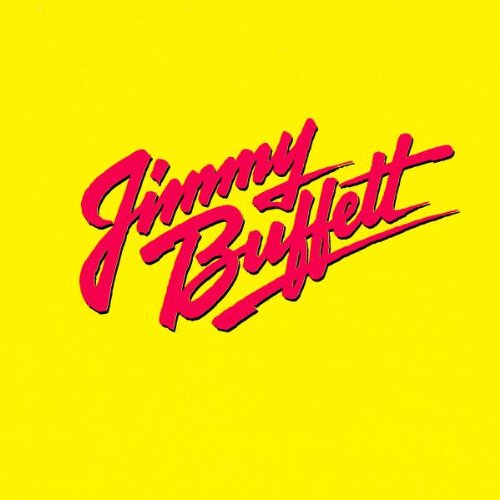
Oh, how the Rust Belt children dreamed! They dreamed so hard they looked around at one another and swore that all of them had transformed into bright colorful birds. Parrots, if you will. The open-air aviary where they gathered was called Blossom Music Center and the magical beach bum who made it all possible was named Jimmy Buffet, who sang about exotica like margaritas and one-night stands and volcanoes and sharks. Land-locked Midwesterners couldn’t get enough of it. You’ve heard of destination weddings, well, this was destination music. With just a bottle of Two Fingers tequila, a few hand-rolled joints of Panama Red and a cassette tape entitled Songs You Know By Heart, any pasty Ohioan could leave behind the sunless days, 47% unemployment rate and soul-crushing hopelessness of the ol’ homestead for a blessed short while.

I was hardly a fan, but the guy was so huge where I came from that I had always assumed he was a star of a magnitude similar to Bruce Springsteen or Elton John. Or at least Phil Collins. Imagine my surprise when I went off to college and started meeting Buffett fans from other parts of the country who regarded him not as some de facto musical giant, but a cultish, eccentric singer/songwriter along the lines of Van Dyke Parks or Tim Buckley! The Billboard charts bear this out–he’s had only ONE Top Ten hit (need I mention it by name?) in almost half a century of recording and only reached the very outer fringes of the Top 40 with a handful of other songs. A small handful.

No matter, though, his fans are legion and they love him and he gives them what they want. He’s started a burgeoning food and drink empire, has his own dedicated channel on SiriusXM satellite radio, and even owns his very own satellite (named, appropriately, Fruitcake) which allows him to listen to his beloved Miami Heat and New Orleans Saints games no matter what remote body of water he’s floating around on. Heck, he even writes high-brow literary fiction under the pen name “Donna Tartt.” Not too bad for the grandson of a sailor!

8-Track Tapes

VLUU L100, M100  / Samsung L100, M100

From our technologically-advanced perch here in 2014, 8-track tapes appear to us as a monstrous “bad memory”—a ridiculous object worthy of nothing more these days than being dragged out for a good laugh at some 70s retro party hosted and attended by yuppies of a certain age unabashedly smug about their ability to carry around their entire collection of Hootie and the Blowfish songs on a media player no bigger than the head of a pin. And while it is true the 8-track tape is more of a 70s phenomenon than an 80s one, the fact is this red-headed stepchild of music media managed to avoid extermination until 1988, primarily due to its continued production and sale via the Columbia House Record & Tape Club. Certainly you remember that highly selective, not-so-secret society based in Terre Haute, Indiana? For just a single penny new members would receive 13 cassettes or LPs or CDs or, yes, 8-track tapes, but these members would then be beholden to the club for the rest of their lives or at least until they bought a certain number more of musical recordings at the club’s regular price of $8.98 plus $14.95 “shipping and handling.”

Although pretty indefensible as a medium for high-fidelity musical playback, there was something solid and permanent-feeling about 8-track tapes. They were fairly big and bulky. The clunk between tracks resonated about the listening room with the significance of a Mercedes-Benz S Class door slamming shut. Plus, listeners had the added bonus of having all the songs rearranged from the order the artist originally intended. Even better, who didn’t enjoy hearing a few moments of dead silence IN THE MIDDLE of a cherished song followed by that familiar ker-chunk, and then the abrupt continuation of the song. Best of all, a lucky few with money enough to install a Sparkomatic or Kraco 8-track tape player in their car could take their tapes on the road for some truly mobile jammin’! Although if you left them on the dashboard for too long the label would fade into illegibility and the plastic case warp like a slice of melted Provolone.